
Why Does Our News Desk Look Different an Hour Into the Show?
The question we hear most about lighting: why a set that looks right at rehearsal drifts on air, and what a plan for long broadcasts does to keep it steady.
Helen Marsh · · 6 minutes to read
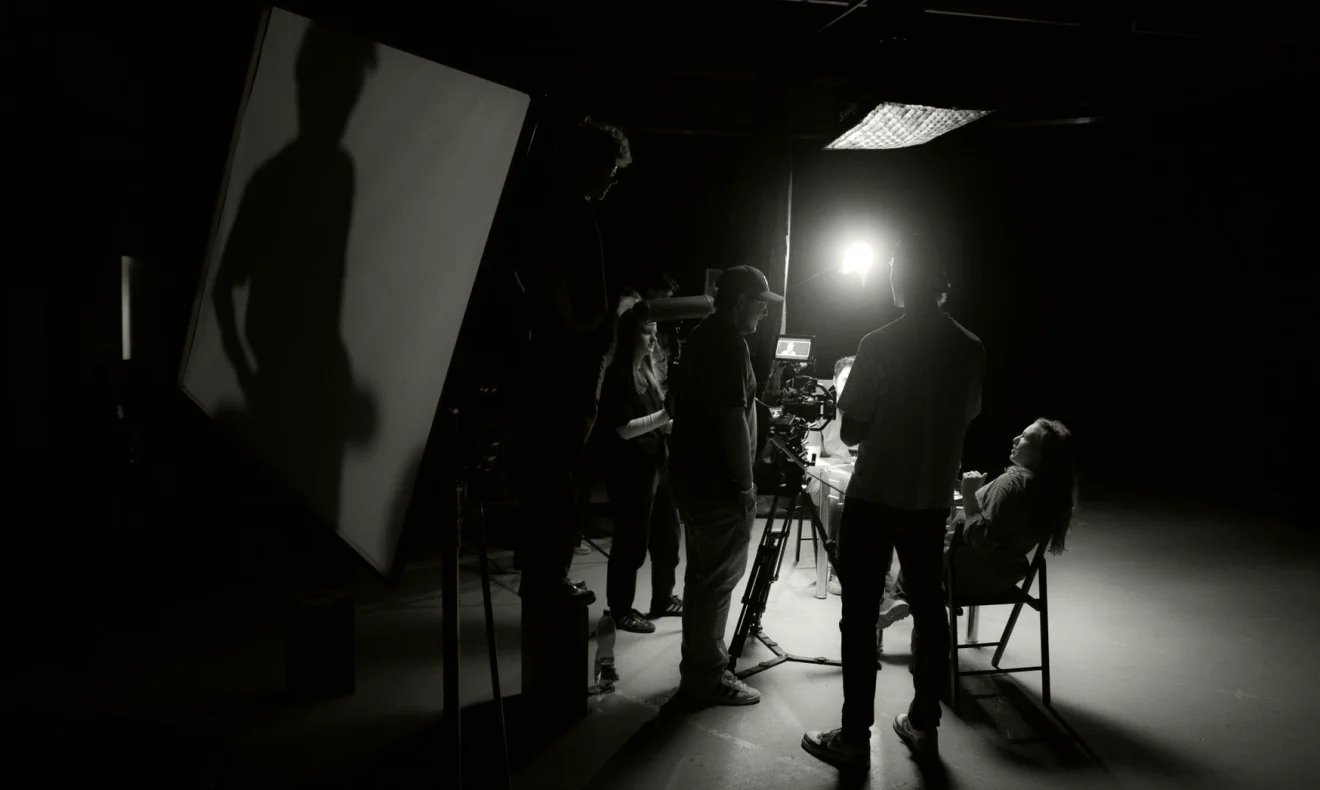
The question we hear most often
Producers and studio managers ask us some version of the same thing: the desk looked right at the afternoon line-up, so why does the picture feel flatter, warmer or harsher by the second hour of a live show? It is rarely one fault. It is usually several small changes that nobody planned for, adding up over a long transmission.
I lead our production systems work, and lighting comes up in almost every gallery review we run, even when the brief is about something else. Presenters notice it first, because they sit under the lamps. The gallery notices it next, when the vision engineer starts nudging camera shading to compensate for a set that has quietly moved.
This article answers that one question as plainly as we can. It sits within our wider lighting work for live sets, and it deliberately stays on the matter of consistency across a long broadcast rather than on how a set is first designed.
Why a set drifts during a long broadcast
Lamps do not behave the same at minute five and minute ninety. Tungsten sources shift slightly in colour as they heat and age, and some LED fixtures change output as their drivers warm up. A desk lit by a mix of the two can drift in two directions at once, which is why the correction on one camera never quite suits the next.
Then there is the room itself. Studio doors, daylight leaking in through a roof light, a monitor wall that changes brightness as the running order moves from graphics to full-frame video: each alters the balance on faces. Skin tones are what the audience reads most closely, so even a small shift is noticed at home.
Power matters too. Dimmers that are loaded unevenly, or fixtures sharing a circuit with other equipment, can introduce slow flicker or level changes. None of these is dramatic alone. Together they explain why the opening headlines and the closing sports bulletin sometimes look like two different shows.
- Colour shift as sources warm up or age
- Mixed lamp types drifting at different rates
- Ambient light and screen content changing the balance
- Uneven dimmer loads and shared circuits
What a lighting plan for long shows actually fixes
A plan for live work starts from the length of the programme, not from the look of the first shot. Tom Eastwood, our lighting designer, begins by asking how long the show runs, how many presenters move between positions, and what else changes in the room. The answers decide the choice of fixtures, not the other way round.
The plan fixes the things that can be fixed: one family of sources per set area where possible, matched colour temperature between key and fill, sensible distances so that heat and spill stay predictable, and a clear record of every dimmer level. If something has to be mixed, it is mixed deliberately and noted, so the gallery knows what to expect.
The result is a set that holds its character. Cameras can be shaded once at line-up and left alone, rather than chased through the programme. That is the real gain: fewer corrections on air, and a picture that looks like the same show from the first headline to the last.
Checks you can make before changing anything
Before anyone buys new fixtures, a few observations cost nothing. Record the desk at the start of rehearsal and again an hour later, using the same camera settings, and compare faces side by side on the gallery monitors. If the difference is visible, you have evidence of drift rather than a feeling about it.
Write down which fixtures were on, at what level, and what the room was doing: doors, roof lights, screen content. Note when your vision engineer made adjustments and in which direction. Patterns appear quickly, and they usually point to one or two causes rather than a general problem with the set.
Bring those notes to a conversation, ours or anyone's. A lighting designer who is given a timed record of what changed can usually narrow the cause in a single visit, and the recommendation that follows tends to be modest and specific rather than a full redesign.
- Compare footage from the start and from an hour in
- Log fixtures, levels and room conditions
- Note every shading change made on air
What we would not change to solve it
The instinct after a bad hour is often to replace the lamps, and sometimes that is right. More often the lamps are fine and the fault lies in how they are mixed, loaded or controlled. Replacing everything on that instinct can cost a good deal and leave the original drift in place.
We also advise against fixing drift purely in the camera path. Shading can hide a colour shift for a while, but it does not stop the lamps changing, and it leaves the presenters in front of a desk that feels different to them even when the picture is corrected. Treat the cause in the room first, then use shading for fine trimming.
Finally, avoid adding light to cure flatness. A set that looks flat at the end of a long show is usually unevenly balanced, not underlit. More output on a drifting set tends to amplify the problem.
When to ask for a second opinion
If your show runs beyond an hour, uses more than one lamp type at the desk, or shares its space with changing daylight, a second opinion is reasonable even when nothing has gone visibly wrong. Drift that the audience tolerates today can become a complaint when the format grows or the schedule moves to a different time of day.
A visit from us covers the lighting as it stands, the notes you have gathered, and what the gallery team sees in practice. We write up what we find in plain language: what is stable, what drifts, and what we would adjust first. Pricing for this work is set out on our prices page, and an enquiry goes through the contact page.
Nothing in that process requires you to commit to a redesign. Often the outcome is a short list of changes to levels, positions and control, with the fixtures you already own.
The short answer to the question we hear most is that a set looks different an hour in because its sources, its room and its power are all moving slowly, and nobody planned for that. A lighting plan built around the length of the show holds those movements still. Start by recording what changes, and bring those notes to us at hello@infozelle.info or on 01865 497 312.
Keep reading
-
How to Check a Studio Room Before You Treat It for Sound
A practical walk-through for producers and studio managers: how to listen, measure and note down what is wrong with a room before any acoustic panel is ordered or fitted.
-
A Checklist Before You Book Camera Operation Coaching
Before you commit crew time to camera coaching, work through these questions on formats, crew experience, studio access and what you want to see on air. Daniel Okafor sets them out.
Helen Marsh
Head of Production SystemsHelen has designed studio galleries for regional news and live events. She leads our equipment integration work.